Inquiry
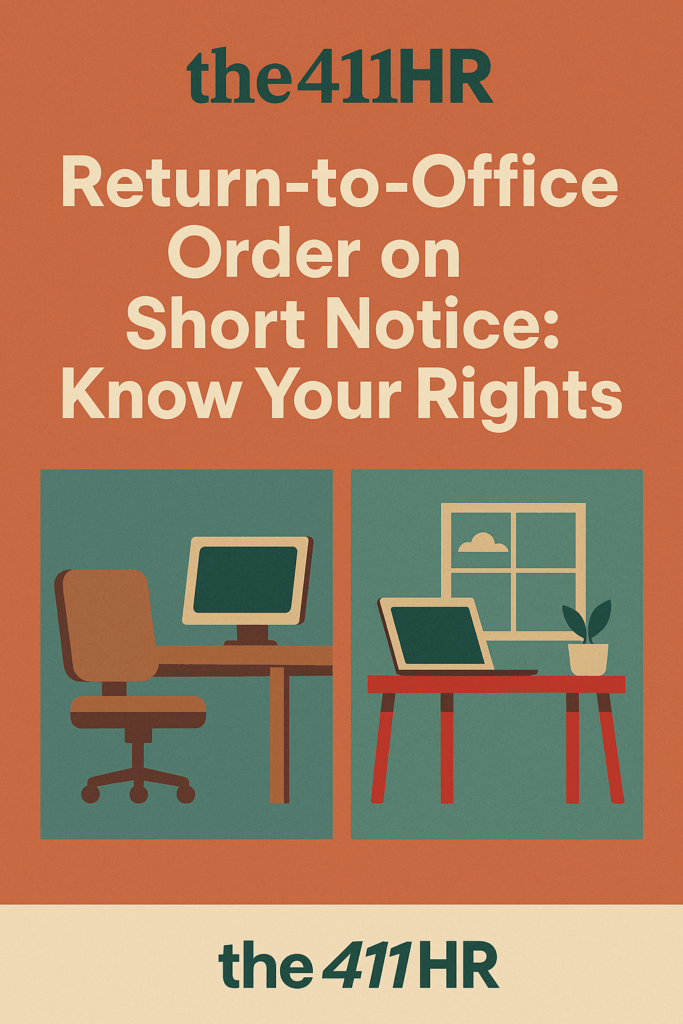
“I’ve been working remotely for over a year, but last week my employer suddenly told me I’m required to start coming into the office full time—with only three days’ notice. I have no childcare set up, and I took this job specifically because it was remote. Can they legally do this? What are my rights?”
How the411HR Helped
1. Listening to the Concern
The employee called the411HR feeling blindsided, overwhelmed, and unsure if this abrupt change was even legal. We took the time to hear her out and gather key information about her job offer, current schedule, and any written agreements.
2. Reviewing Remote Work Agreements
We helped the employee review her original offer letter and HR documentation to confirm whether remote work was listed as a condition of employment or had been formally approved. In this case, it was—but only verbally, with no formal documentation.
3. Explaining Employer Rights
We explained that unless remote work is part of a contractual agreement or protected under disability-related accommodations, employers generally have the right to change work locations—even suddenly. However, we also highlighted that this doesn’t mean the employee is without options.
4. Exploring Accommodation & Flexibility Options
Because childcare was a key concern, we discussed the possibility of requesting a temporary flexible work arrangement under her company’s policy or making a request for accommodation under the Family Responsibilities Discrimination framework, depending on the situation.
5. Drafting a Professional Response
We helped the employee draft a clear, respectful email to HR that outlined her concerns, requested a transitional period to arrange childcare, and asked whether the company would consider a hybrid model given her strong performance over the past year.
6. Continued Support
We offered to review any response from her employer and remain available to help her evaluate her options—whether she stayed, transitioned to a new role, or needed a legal referral.
The Outcome
With our help, the employee approached HR with professionalism and confidence. Her employer agreed to a temporary 30-day hybrid schedule to give her time to make new arrangements. While the return-to-office policy ultimately stood, she was empowered to advocate for herself—and now felt prepared for future conversations about flexibility or employment transitions.